
River Forest, IL, is a long-established residential community bordered by Oak Park to the east and the Des Plaines River to the west. It is known for spacious estate-style lots, early twentieth-century homes, and a thick urban canopy of mature oaks, elms, and silver maples. Those same features can create real challenges: narrow side yards, underground utility paths, and roots that have spread far beyond their original planting areas. The tree care professionals in Chicago serving this area know how to evaluate structural risk in aging trees, handle root growth near foundations and hardscape, and safely prune or remove large trees where access is tight.
That is why more River Forest property owners rely on Arbor Tree Care for year-round property maintenance.

Prefer to Talk to An Expert?
(872) 395-8880
Why River Forest Property Owners Trust Local Professionals to Get It Right
Crews with local experience understand the neighborhood’s dense canopy, historic lot layouts, and close proximity to utility corridors. Every job is matched with the tools and methods best suited to River Forest properties, with care given to root-zone sensitivity, overhead line conflicts, and the storm exposure common across this part of Chicago.
From professional tree pruning solutions along Ashland Avenue near the Forest Park boundary to large-scale reliable stump removal specialists on estate lots near Keystone Avenue, each project is completed with accuracy and long-term property care in mind.
If you take pride in your property, work with local contractors who can help keep your canopy healthy, your walkways open, and your home safer in River Forest.
Our Tree-Service Services
in Chicago, IL, Include
A Service Area Designed to Fit Your River Forest Neighborhood
The deep setbacks and mature tree coverage in this neighborhood call for tree services that are never one-size-fits-all. Local professionals adapt their approach to each property, whether access is limited by a narrow side yard or the work area stretches into a broad rear canopy.
It makes no difference whether the property is a historic Tudor estate in the Keystone Avenue corridor, a mid-century brick two-flat near Quick Park, or newer construction close to the Thatcher Woods Forest Preserve boundary.
From tree trimming and tree disease treatments to root protection and lightning protection, every service is shaped around the neighborhood’s character and the specific needs of each property.
River Forest's Dense Urban Canopy, Shaped by History
River Forest has long been one of the Chicago area’s most distinctive residential communities. Large lots were laid out in the late 1800s and early 1900s and planted with trees that are now fully mature. That legacy still shows up today in aging root systems, utility-line conflicts, and structural stress in the canopy, all of which affect how tree work must be performed now.
Mature Oak and Elm Structural Decline
Many River Forest properties, especially along Lathrop Avenue and the streets near the Chicago, Burlington and Quincy rail corridor, contain bur oaks and American elms that have reached or passed their strongest structural years. Deadwood buildup and co-dominant stems are common, and both can raise the risk of failure over roofs, driveways, and sidewalks.
Local professionals address this decline with selective crown reduction, deadwood removal, and cabling support systems that help limit long-term access problems and reduce liability for owners.
Root Encroachment on Historic Hardscaping
Silver maples and green ashes add beauty and shade across the neighborhood, but their expanding roots often damage older hardscapes over time. Surface roots can lift bluestone walks and crack brick paver driveways, creating safety concerns and expensive repair needs.
Crews handle these areas with precision root pruning, air spade excavation, and root barrier installation, all adjusted for existing foundation depths and utility corridor placement.
Dutch Elm Disease and Oak Wilt Pressure
Decades of dense planting have left many River Forest elm and oak populations vulnerable to disease spread through connected root systems and insect vectors. Properties along Bonnie Brae Place and the Village Hall corridor often show recurring canopy decline that matches active disease pressure.
Trusted professionals respond with early diagnosis, targeted tree disease treatment protocols, and strategic removal of affected material to support healthier canopies and slow spread to neighboring properties.
Seasonal Storm and Wind Damage
Spring and summer storms across the Chicago area often bring strong winds that can exceed forty miles per hour. In older or overextended canopies, that kind of weather can cause limb failure, especially near buildings and power lines.
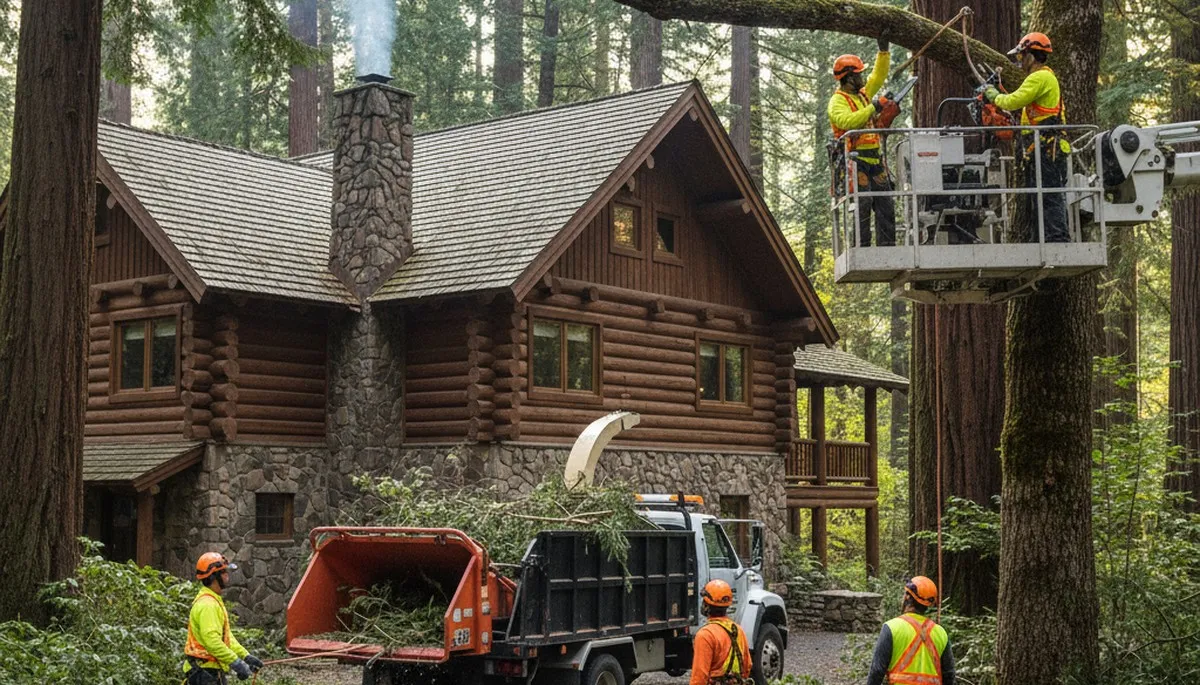
Skilled crews provide emergency tree services with aerial lifts, rigging equipment, and sectional removal methods to clear debris safely and stabilize the site even when access is limited after a storm.
Insect Pressure from Emerald Ash Borer and Scale Insects
Emerald ash borer and soft scale insects remain a concern in River Forest, making proactive canopy care harder to postpone without speeding up tree loss across entire blocks.
Local professionals use targeted insect management treatments and regular canopy inspections, focusing on early action and species-appropriate applications that support each property’s health and preservation goals.

Kick off your tree service project today!

Tree Services in River Forest, IL: Care for Every Season
From routine canopy care to urgent storm cleanup, here’s how local professionals help keep properties safe, healthy, and structurally sound:
Routine Tree Trimming and Pruning in River Forest, IL
- Crown Cleaning on Mature Oaks Along Lathrop Avenue: Removing deadwood and crossing branches helps lower fall risk on large bur oaks whose canopies extend over rooftops and sidewalks. Tree trimming for these trees calls for aerial lift access and careful sectional cutting to protect nearby structures.
- Structural Pruning for Young Canopy Replacements Near Thatcher Woods: Newly planted shade trees near the forest preserve boundary benefit from early structural tree pruning to establish a strong central leader and reduce the chance of co-dominant stems as the canopy matures.
- Clearance Trimming Along the BNSF Rail Corridor: Homes near the Burlington Northern Santa Fe rail line need ongoing utility clearance trimming to maintain safe distance from overhead infrastructure and avoid contact during high-wind events.
- Seasonal Crown Reduction on Silver Maples in the Keystone Corridor: Silver maples on deep-setback estate lots often grow quickly and need periodic crown reduction to balance weight and reduce wind sail during summer storms.
- Canopy Thinning for Light Penetration on Dense Residential Lots: Heavily shaded rear yards along Bonnie Brae Place and nearby streets benefit from selective thinning that improves airflow, lowers fungal pressure, and brings more light to understory plantings. Neighboring communities, including those using tree trimming services in Oak Park, IL, deal with similar canopy density concerns.
Plan routine trimming before spring growth begins so canopies enter storm season with less stress.
Tree Removal Services in River Forest, IL
- Hazardous Tree Removal Near Residential Structures: Trees with serious trunk decay, advanced crown dieback, or root plate failure near homes along Ashland Avenue and nearby streets require controlled sectional removal with rigging systems to protect structures below.
- Storm-Damaged Tree Removal After Wind Events: When storms split trunks, uproot root balls, or leave hanging limbs behind, crews respond quickly to restore access to driveways, walkways, and public rights-of-way.
- Dead Tree Removal from Ash Borer Infestation: Ash trees lost to emerald ash borer across River Forest’s parkway inventory need to be removed before decay turns them into uncontrolled hazards.
- Removal of Overgrown Canopy Trees on Estate Lots: Large silver maples and cottonwoods that have outgrown their planting space on historic estate properties along Keystone Avenue are removed with crane-assisted sectional techniques when ground access is limited.
- Parkway Tree Removal Coordination with Village Requirements: River Forest has specific permit and notification rules for parkway tree removal. Local professionals familiar with Village of River Forest ordinances coordinate those steps alongside the removal work.
Scheduling removal in late fall or winter can reduce disruption to nearby plantings and make room for stump grinding before spring landscape work begins.
Stump Grinding and Cleanup in River Forest, IL
- Below-Grade Stump Grinding on Estate Lots: Stumps left after large oak and maple removals on deep-setback properties are ground below grade so the area can be used for sod, new planting, or hardscape work without obstruction.
- Surface Root Grinding Along Brick Walkways: Exposed roots near historic brick and bluestone walks are ground down to reduce trip hazards and make pathway repairs possible without major excavation.
- Stump Removal Near Foundation Plantings: Stumps close to foundation walls and planting beds require careful depth control to avoid disturbing nearby root zones or underground drainage lines.
- Cleanup and Chip Removal After Grinding: After grinding, chips are cleared from the work area and either reused as mulch on-site or removed based on the owner’s preference and landscape plan.
- Stump Treatment for Sprout Suppression: Some species, including cottonwood and silver maple, can send up aggressive sprouts after removal. Chemical stump treatment at the time of grinding helps limit regrowth and makes long-term upkeep easier. Communities such as those served by tree removal contractors in Elmwood Park, IL face similar stump-management needs on mature residential lots.
Prompt stump grinding helps prevent pest habitat, removes trip hazards, and prepares the site for replanting or hardscape improvements in the next growing season.
Emergency Tree Services in River Forest, IL
- 24-Hour Response for Storm-Downed Trees on Structures: When storms move through the Chicago metro area and push limbs or full trees onto rooftops, cars, or fences along River Forest’s residential streets, emergency crews arrive with the tools needed to clear the load safely and stabilize the structure underneath.
- Fallen Tree Removal from Driveways and Access Routes: Blocked driveways and alley entrances are cleared quickly to restore vehicle access and reduce the chance of additional damage caused by delays.
- Suspended Limb Extraction from Overhead Lines: Partially broken limbs hanging in utility lines or resting against structures require controlled removal using aerial equipment and rigging to prevent sudden drops.
- Post-Storm Canopy Assessment and Hazard Identification: After heavy wind or ice, professional assessments identify split limbs, broken unions, and root plate movement that may not be obvious right away but still create ongoing fall risk.
- Emergency Storm Damage Response for Ice-Loaded Canopies: Winter ice storms can place hundreds of pounds of extra weight on mature River Forest trees, requiring emergency pruning and structural support to reduce the chance of cascading failure across multiple limbs or co-dominant stems.
Fast emergency response helps limit secondary damage, restores safe access, and documents storm-related tree loss for insurance and municipal follow-up.